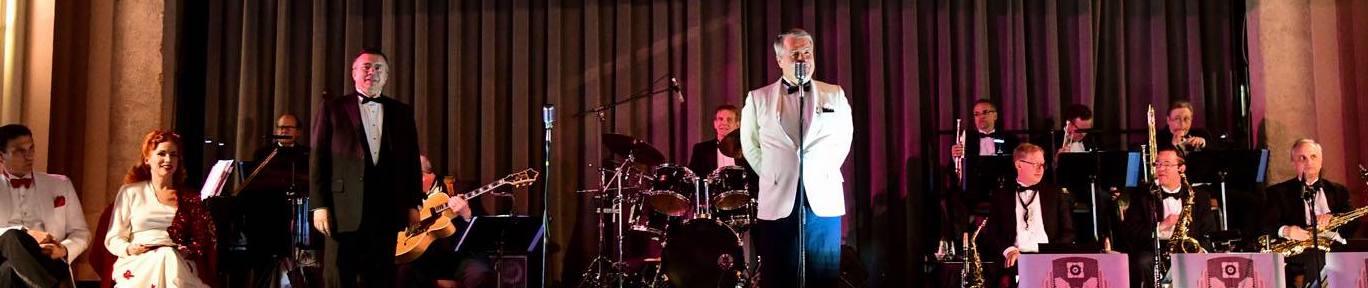
There was a time, not too long ago, when our society had something precious that we have since cast aside, and we are much the poorer for it. I will say a few words about it, and embrace the hope that somehow, in some small way, it can return.
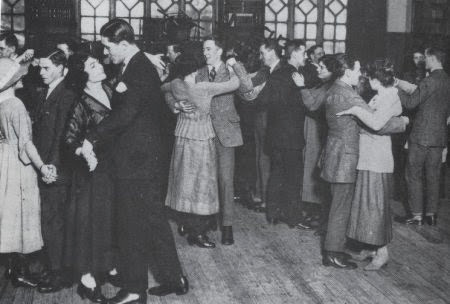
In the first half of the 20th Century, the whole world danced. There were dance palaces, with room for thousands, and their floors were packed. There were small dance halls, restaurants, nightclubs, dive bars, and living rooms, all filled with men and women dancing together. That gradually diminished in the years after the Second World War, and then largely ended in the 1960s.
In our world today, in the 2020s, people complain of isolation. While social media connects us virtually to friends, acquaintances and strangers all over the world, actual human contact seems to be on the decline, and the Pandemic has only exacerbated the trend. School and the office, historically stalwarts of enforced personal interaction, have become more and more “virtual” and distant.
I recently had a conversation with a young grad student. She said that her classmates’ day consists of school work, eating, online gaming and sleep. Further, they almost never make eye contact, even with their friends.
Romance, that bellwether of social connection, appears to be atrophying. Only a little over half of “Gen Z” adults report having had romantic relationships during their teenage years, as opposed to three quarters in my generation. While I lack the wisdom or the data to properly analyze the full impact of this, it appears to be self-evident that as individuals we are drifting apart. Society is atomizing into isolated individuals staring at glowing screens, and our interaction has devolved into seeking and bestowing “likes”, or interacting with text messages, or disembodied voices out in the ether while inhabiting a digitally generated imaginary world. To add to this, AI is creating artificial people you can interact with as if they were an actual human, without any of the complications that come with real human relationships – at least until the AI decides it doesn’t need you anymore, but then that’s a different discussion.
From this, I look back on the world I see depicted in those old movies and see something quite different. I don’t want to over valorize the “Good Old Days”. We are talking about a time of social turmoil, the rise of Communism and Fascism, two horrific world wars and a raft of smaller conflicts that brought death to millions, with untold misery and destruction. We’re also looking at economic inequality and collapse, unalloyed racism and bigotry, sexism, untreatable diseases and countless issues that we can confidently say are better now than they were then.
So I freely admit that I am cherry picking. I am focusing on one particular aspect of that time which, while it can’t be viewed in isolation from the larger society, was only a small part of the greater picture. The thing I am focusing on is dancing, but in dancing I see something we, for all our vaunted progress are rapidly losing. That thing is connection.
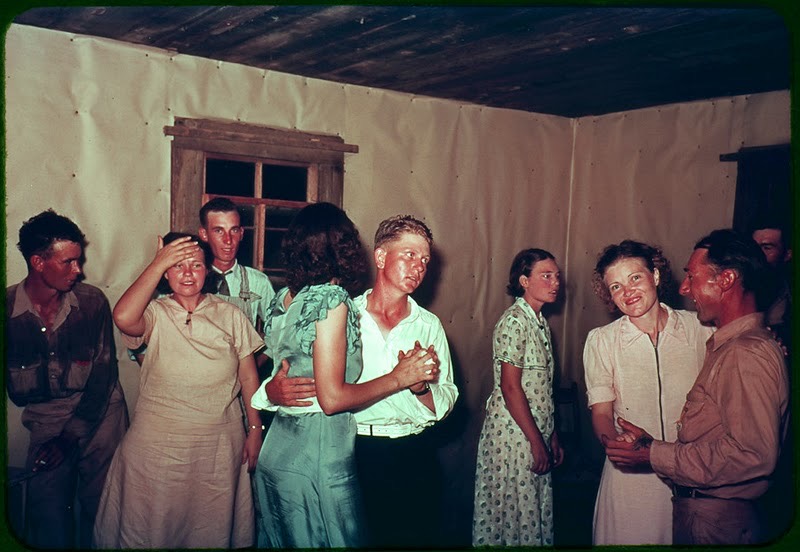
So a few words about the place of dancing: as I observed earlier, in the first half of the 20th Century, the whole world was dancing. While I have no idea how I would find hard statistics to support this assertion, the fact that most major cities boasted multiple dance palaces with room for hundreds or even thousands of dancers, and they were often packed so tight the dancers could barely move, is clear testimony to a wide appeal that we cannot come close to matching today. That along with frequent examples of dancing in posh nightclubs and modest restaurants, at fairground dance pavilions, in low dives, private parties across all social classes, and numerous examples of spontaneous dancing at the beach, on picnics and in countless other places where it seems like dancing was a default setting, the way men and women, boys and girls interacted when they got together. They didn’t have to tax their wits to make conversation, and they didn’t have mobile phones to stare at, and they could get up and dance,
Among the more revealing pieces of evidence about the place of dancing is the Taxi Dance Hall. These were places where lonely men could battle the dreary isolation of city life by spending a dime a throw for a ticket that got them a two minute dance with a woman. To a lonely man of the time, the logical and obvious answer to a sense of isolation, the need for human connection, was to find someone to dance with. That sort of thinking would be utterly alien to men today, to men who either never dance, or if they are among the minority who do, just gyrate in place to deafening music a yard or so away from their partners. Why would anyone pay a partner for that experience?
Then there were the public dance halls that offered a place for dating couples and unattached men and women to go to meet and interact with members of the opposite sex, and women at the time thought nothing of dancing with other women if the male contingent failed to provide sufficient acceptable partners.
These dance halls weren’t just an urban phenomenon. There were thousands of them scattered around rural communities. They were considered such an essential public work, that the WPA was responsible for building thousands of rural and suburban dance halls or community centers that incorporated a ballroom. Further, the thousands of fraternal organization halls (Masons, Elks, VFW etc.) built around the country at that time almost always included a well-constructed dance space, and hosted frequent dances for their members and the community.
The Dances
The dances of the moment were called “The Modern Dances”, to distinguish them from the “Victorian” or “Old Time” dances of the previous century and various folk dance traditions. The use of the word “Modern” seems to had a bit more significance than just marking them as new. The period following the turn of the 20th Century, and then especially in the two decades that followed the end of the First World War, being “modern” was central to the zeitgeist of the moment.
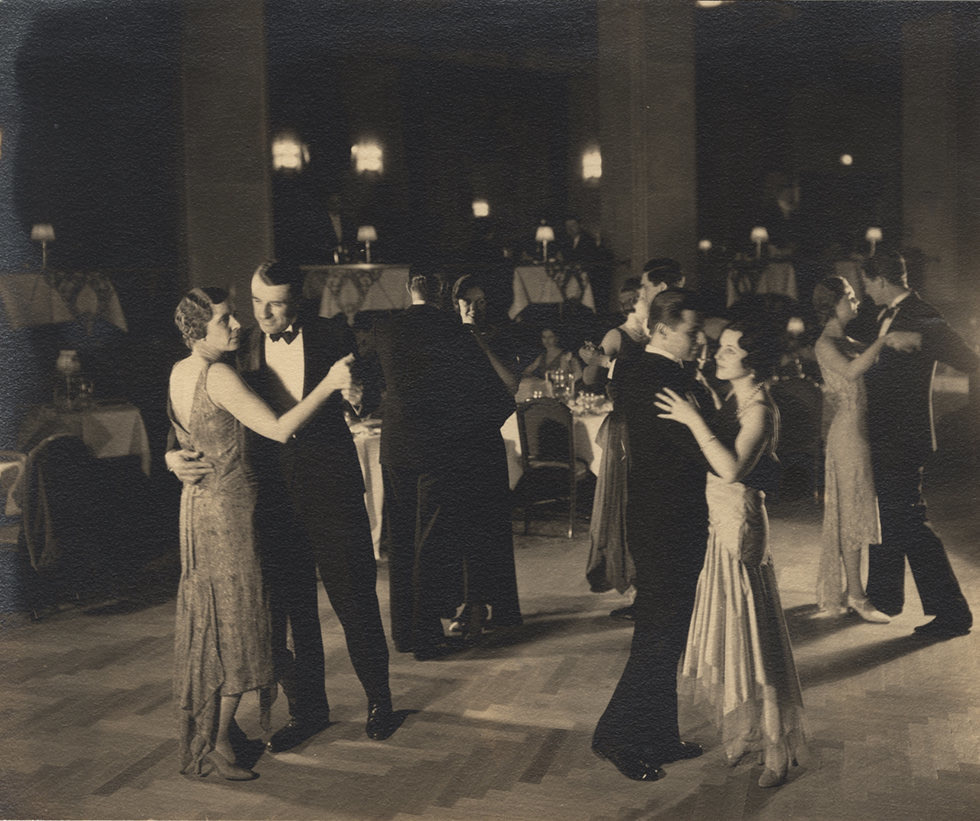
If you were being modern, you embraced an optimistic vision of the future, with its electricity, fast motor cars, even faster aeroplanes, radios and labor saving appliances. You admired Art Deco architecture and design, you celebrated visionary artists like Picasso, you lived in the modern world. The world was changing, and you were a full participant in that change.
At the heart of this movement was the music of modern times: jazz -- and the jazz of the 1920s was not the meandering free jazz of today, but had an infectious, driving beat. It was dance music. If you were modern, you listened to and danced to the jazz. Its seductive rhythms were a gateway to a modernist frame of mind. Once you embraced jazz, you were open to considering the whole Modernist package.
Nowhere is this more in evidence than in Shanghai, that international city where the local Chinese elite embraced the modern world, wore western clothing, built Art Deco buildings and, as an essential element of their modernism, opened nightclubs and dance halls where western bands and local Chinese jazz bands, with their own distinctly Chinese take on Jazz played -- and they danced the modern dances.
So what were these modern dances? If you ask most people what was danced in the ‘20s, they will say “Charleston” and in the thirties “Swing”, or perhaps uncritically assume it was all just Swing through the whole era.
Certainly these were dances of the time, but they were never the foundational dances.
If you take a moment to consider, in a time when everyone danced, how many would have the stamina and skills to Charleston or Lindy Hop all night? In a time when everyone danced, they would need to have a dance anyone could do.
The primary dance of the Modern collection was in fact, the Foxtrot. If you’ve ever looked at the labels of old 78 RPM records, or sheet music of the time, you will see that almost every danceable piece that isn’t a Waltz or a Tango is marked “Fox Trot” with Foxtrot being the vast majority.
This is not the Foxtrot you see on “Dancing With the Stars” and it’s not the Foxtrot you may have learned last year at Arthur Murray. Ballroom dances have changed over time, and in the Jazz Age, the Modern Ballroom Dances were far simpler than their current incarnations. They were dance boiled down to its essence. They were essentially walking to the music.
“Of course. The fox-trot you can learn in an hour. The Boston [Waltz] in two. The Tango takes longer, but that you don’t need.” – Steppenwolf, Herman Hesse
There are some very interesting aspects of this Modern Dance that I think are key to its widespread adoption and appeal.
It is simple enough that while not everyone can dance it smoothly and confidently, almost anyone can handle the basic movement.
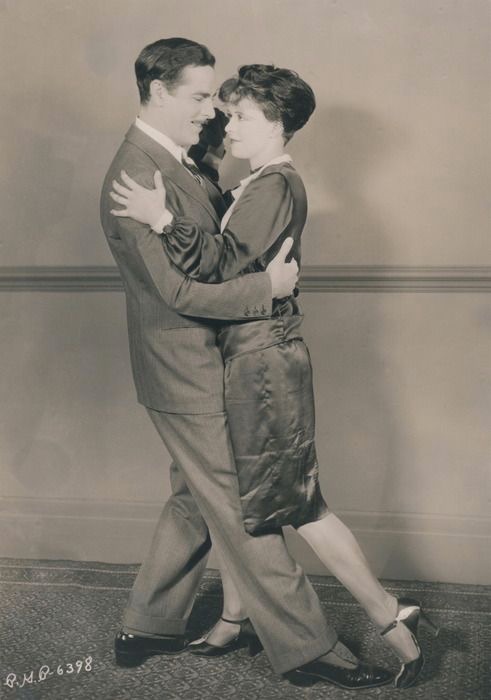
While the basic step is simple, it is unstructured and ungoverned enough that people who want a more challenging dance can simply make it so by adding their personal favorite steps or other touches.
The hold is not a frame with dynamic tension, but it is relaxed and intimate. It is body-to-body. While many dancers these days are not comfortable with this, it was surprisingly universal at the time, and I would suspect was a large part of its appeal. It appears those earlier generations had a different sense of “personal space”. Further, it made for a very clean, natural lead with the leader and follower flowing as a single unit, with a minimum of overt cues and signals. The leader did not steer his partner with a rigid frame.
It was non-performative. By this I mean that there was no expectation that the dancers would dance to impress, would show off. They would not feel compelled to go through complex routines that look good to an audience while breaking their the focus on the partner. They did not feel obliged to do tricks to show how good they were. This I think is key. It was the essence of real Social Dancing.
Certainly there was no shortage of performative dancing at the time. Exhibition dancers in the Fred Astaire mold were a regular fixture at nightclubs, and young people, with their Charlestons, Swing and the like, danced to impress their peers and thereby enhance their standing in their peer group. However, the vast majority of dancing, the dancing that filled those dance floors across the globe, was simple, non-performative and social.
When you look at those old movies, you don’t see much in the way of tricks and fancy routines among the social dancers. You seldom see throw outs, underarm turns, twinkles, grapevines and other moves that are the standard fare of most current ballroom or swing dancers. Certainly expansive moves would be unwelcome on those crowded floors, but I think they were also viewed as a distraction. The dancers would stay in their close hold and move across the room, rotating, leaders often dancing backwards but always keeping their focus on one another.
This creates an interesting dynamic. First, dancing well is not a function of what fancy routines you can do, but how well you can sync with your partner to maintain a smooth, easy flow. Dancing well is less about how you look and more about how you feel.
Further, since there is no expectation of performance, dancers removed a lot of the stress that comes with new partners, the idea that the dance is a test and you have to show off your best moves to impress, while your partner struggles to follow an unfamiliar lead. It makes for easier social mixing. You would never have to worry that you had different teachers and so wouldn’t know the same routines. A man from Los Angeles could dance with a pretty stranger from Shanghai, and they would probably do just fine.
This tied in well with an important point of etiquette at the time: it was considered tedious to limit yourself to a single partner. People would be expected to dance with as many different people as circumstances allowed.
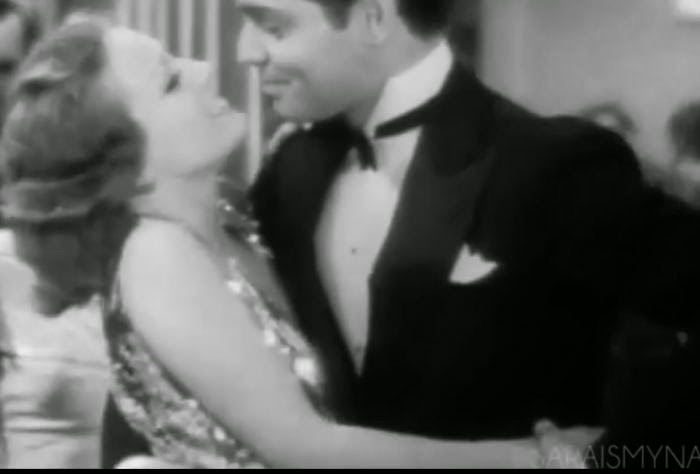
This is all a part of the zone of alternate reality that is the dance floor. In dancing, very different social rules apply. The dance floor reality accepts a degree of physical intimacy and social mixing that would be unacceptable in a different context. If I were to attend a party and hug every woman there for around three minutes, it would be very awkward. There would be consequences. However, add music and footwork, call it “dancing” and it becomes a good thing.
When following the social mandate to engage in promiscuous dance partnering, this intimacy is liberally distributed, providing a socially sanctioned brief respite from strict monogamy and building friendly and positive connections between men and women, boys and girls, outside their primary relationship (if they have one). It could also, of course, smooth the path to building a romantic relationship, if one was desired.
A frequent dance partner of mine observed that dance is an excellent way to assess potential romantic partners: not so much from how well they dance but how they behave. How does he treat his partner; is he gentle and considerate; does he connect with her or just focus on the task at hand; is he pleasant and cheerful; if he makes a mistake, does he blame her?
Of course history’s best “pickup line” has always been “Would you like to dance?”.
This physical intimacy and non-demanding, non-performative dancing also provided an opportunity to talk. Conversation while dancing was not required. A silence while dancing was not awkward in the way such a silence could be while sitting together. However, conversation was always an option, and unlike “normal” conversation in a public place, it was uniquely private. With your heads so close together, and the background noise of the music, whatever you might say would probably not be overheard. You could discuss anything: gossip, the weather, dinner plans, confessions of love – all can be said in that most private of public places. It should be noted that at the time, (unlike today) the music was at a volume that conversation was comfortable, and shouting was seldom required.
So this was the dance of the Jazz Age. In slow to fast 4-4 time, it was a Foxtrot, in slow 2-4, it was a Tango and in 3-4 time, it was a Waltz, but in whatever tempo, the sense of the dance was the same. It was simple, flexible, intimate and highly connected. I suspect this intimacy had a lot to do with its popularity in that moment in history when it seems like more people were social dancing than at any time, before or since. Perhaps it was the shot of oxytocin from all that “hug dancing”, but for whatever reason, it was as close to universal as social dancing has ever been. Unless you were forbidden by religion, physically impaired, cripplingly shy or just obstinately contrary, you were doing your best to dance when the occasion arose, and it often did.
And then it all changed, and that change seems to track with changes in society, an increasing separation that has culminated in the widespread isolation of our own troubled time.
I think it starts in the 1940s. In film and photos from around the time of the Second World War, we begin to see increasing numbers of dancers, especially younger dancers, adopting a frame rather than a close hold. I don’t really have an answer as to why, but there seems to have been a growing consensus among the coming generation of dancers that it was better to maintain a little distance.
This coincided with a gradual change in social dancing. Perhaps part of was the influence of Swing, but dance in the post war world was becoming more performative. This was especially true with the growth of Latin dances like the Cha Cha and Mambo in the 1950s.
The Rumba that emerged at the start of the thirties was a break from earlier Modern Dance tradition, in that, in the style that was popularized by dance teachers a few years after the music arrived, it was danced in an open frame or even fully separated, and the dancers were encouraged to perform, to show off. This carried forward to the Latin dances that came after the War, and into the fifties, like the Cha Cha, Mambo, Merengue etc.
The Fifties was the decade when social dance slowly died.
Most of my working life was spent at a government think tank where I often dealt with the corporate archives, which included the company newsletters. In the fifties, this collection of physicists, economists, rocket scientists and the like would regularly put on their tuxedos and take their wives and girlfriends to dinner dances at the local country club. In the early ‘50s, such a thing seemed natural and appropriate. Some wag even drew a cartoon of an office Christmas party that included a computer giving dance lessons. By the ‘60s, the dancing stopped. I never found a record as to why, but I can only assume that attitudes and interests had changed.
So here’s where I speculate: I think the growing emphasis on performance was intimidating a lot of dancers, especially men. Speaking as a man, among a man’s greatest fears is looking stupid in public. When you make a dance a performance, with the implicit threat that his performance will be judged by his partner and anyone who sees him to be lacking, a lot of men, perhaps most men, will find excuses to not dance. There are certainly men who enjoy performing and thrive on the attention, but many more fear being open to ridicule while going through the awkward learning phase – and so they sit down and leave the floor to the “real dancers”.
Perhaps the ‘30s Swing Kids growing up might have had something to do with this. In a lot of film and images of the ‘30s and ‘40s, you can see a few couples doing some flashy swing dancing while the majority of the crowd either Foxtrots or just stands and watches. Maybe these Swing Kids grew into the “real dancers” that made the ordinary guys feel like they would be better off sitting it out.
I have no doubt that this was exacerbated by the dispersal of society, especially in the US, with vast suburbs spreading out over the landscape, and a growing emphasis on the home and the family, with the TV at the center of the new paradigm.
Adding to the mix was some wrong-headed tax policy: wartime “Cabaret Taxes” that penalized businesses that served food and alcohol and allowed dancing – which persisted long after the War had ended. This drove most of the “Dine and Dance’ restaurants that were a regular feature in the ‘20s & ‘30s, to move tables onto the dance floor and either do without a live band, or hire bands that played that new undanceable Bebop that was about musicians doing jazzy solos (with obligatory applause after each solo) and not about accommodating dancers.
Perhaps Rock and Roll also contributed. By the ‘50s, mainstream music seems like it had lost its way. The frequent recycling of “American Songbook” classics with a cool, hip jazzy beat by performers like Frank Sinatra and Bobby Daren, and the appropriation of a lot of foreign, especially French tunes suggests to me that Tin Pan Alley in the fifties was running out of ideas.
If you wanted to find innovation and creativity, the place to look was Rock and Roll. That’s where the energy was, but that energy was exclusively focused on the youth market. In the Jazz Age, in the “Big Band Era”; the top bands played for all ages. Popular music offered something for everyone. By the ‘50s, there was a clear and distinct bifurcation between the kids and the adults.
The dancing to this new Rock and Roll was essentially a very high energy form of Swing with lots of throw outs, underarm turns and the like. In 1940, a mature crowd could Foxtrot to Glenn Miller’s band playing “In the Mood” while the kids Jitterbugged, but that really wasn’t an option in the next decade to “Good Golly Miss Molly”.
There was something interesting happening to this Rock and Roll dancing, which was of a piece with what seems to have been a gradual drifting apart of people in general – the next stage after moving from a close hold to a frame.
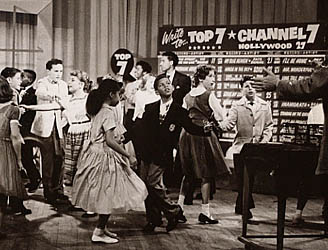
YouTube has many years’ worth of that snapshot of US popular culture “American Bandstand”. In watching it, I see an interesting development. There had always been an option in Swing, and indeed in earlier times like the Charleston era, for partners to break from their embrace to do separate solos, usually then reconnecting to continue dancing together.
In the earlier years, this seems to be the pattern, with partners spending more time connected than separated, but it changed over time. By the end of the ‘50s, it seems like the pattern has become to start connected, then send the woman out with a throw out, after which the two each do their own dances in the general proximity of one another, without actually touching.
As the sixties begin, that pattern is visible in movies. In examples I have seen, the background dancers might still be doing connected Swing, while the principles, the “cool” characters, were dancing solo.
I think it was probably the Twist that finished the job. I’m old enough to remember all the adults around me joining in the Twist craze, somewhat like the brief inroads the Charleston made into general society in the mid ‘20s; but as with the Charleston, the adults quickly lost interest.
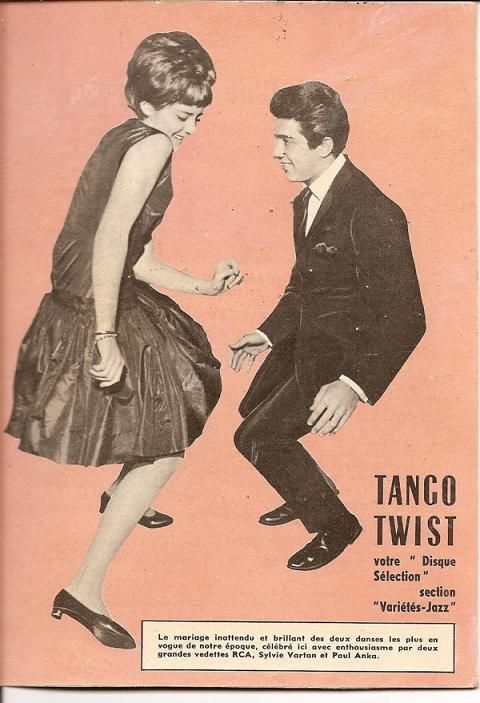
After the Twist, it seems like the kids finally gave up on their Rock and Roll Swing dancing, and fully embraced the solo, “Freestyle” self-expression style of dancing. Moves like the Swim, the Watusi, the Frug, the Pony had their brief moment in the sun, but the dance style of the ‘60s was essentially gyrating in place to the music. It was a style well suited to a drug-addled state, it required no dance teachers, and it was a style that, in the opinion of this man, women generally do better than men.
And there’s the rub: Freestyle is performative dancing boiled down to its essence. You are out there on the floor and your focus is not on your partner but on yourself and how YOU look. This is already a serious deterrent for a lot of very self-conscious adolescent boys, and it isn’t helped by the tendency in our culture to regard male dancers as fair game for ridicule and snarky comments (the “White man’s overbite” comes to mind).
As a teenage boy, I almost never danced. I felt like a fool, like I had no idea what I was doing, and was sure everyone was looking at me and judging me.
What changed for me was getting hired by the Dickens Christmas Fair in San Francisco and taught to Waltz and Polka, to actually dance with a girl, to connect with another person and focus on us as a couple, rather than trying lamely to put on a solo show for someone who might find me lacking, or some hypothetical audience.
Most boys who started out like me, but never found old-fashioned partner dancing, grew up to be the men who find excuses not to dance with their wives and girlfriends, and would rather be safe and sit down to watch the “real dancers” dance.
But now to return to my timeline.
While the kids carried on with their Frugs and Watusis to their deafening music, the adults did not join them, but neither did they, for the most part, continue to put on their glad rags and go out dancing as couples. All that dressing up and Foxtrotting had come to seem too square, too Establishment.
The sixties swept away the old norms for kids and their elders. Notions of proper attire and personal grooming, social etiquette, and old fashioned social dancing were all pushed aside. The relaxed social Foxtrot went the way of ladies’ gloves and gentlemen’s hats.
The sixties also swept away the sense of a shared adult culture (generally referred to in the etiquette books as “Society”) and replaced it with an exclusive focus on Youth Culture, where each successive generation felt attached to the Youth Culture of their late teens, with every successive generation identifying with the elements of the culture of their own youth.
In yet another way, our world continued to fragment.
As the greater part of society gave up social dancing, this left a small core of people who wished to continue it, and by this self-selection, they were more focused and dedicated than the multitudes of casual dancers of an earlier time. They were primed for the attentions of the dance teachers. There had always been dance teachers, providing confidence for the hesitant and helping people who wanted to dance more proficiently the means to do so. However, their influence over the chaotic world of the Jazz Age dance floor was sporadic at best and their attempts to impose order and standards fell mostly on deaf ears.
However, with this smaller, more pliant audience they finally had the control they had always wanted. What they created was a world of structure, standards and complexity (why pay for multiple lessons to learn something easy), and to provide a focus, they emphasized competition.
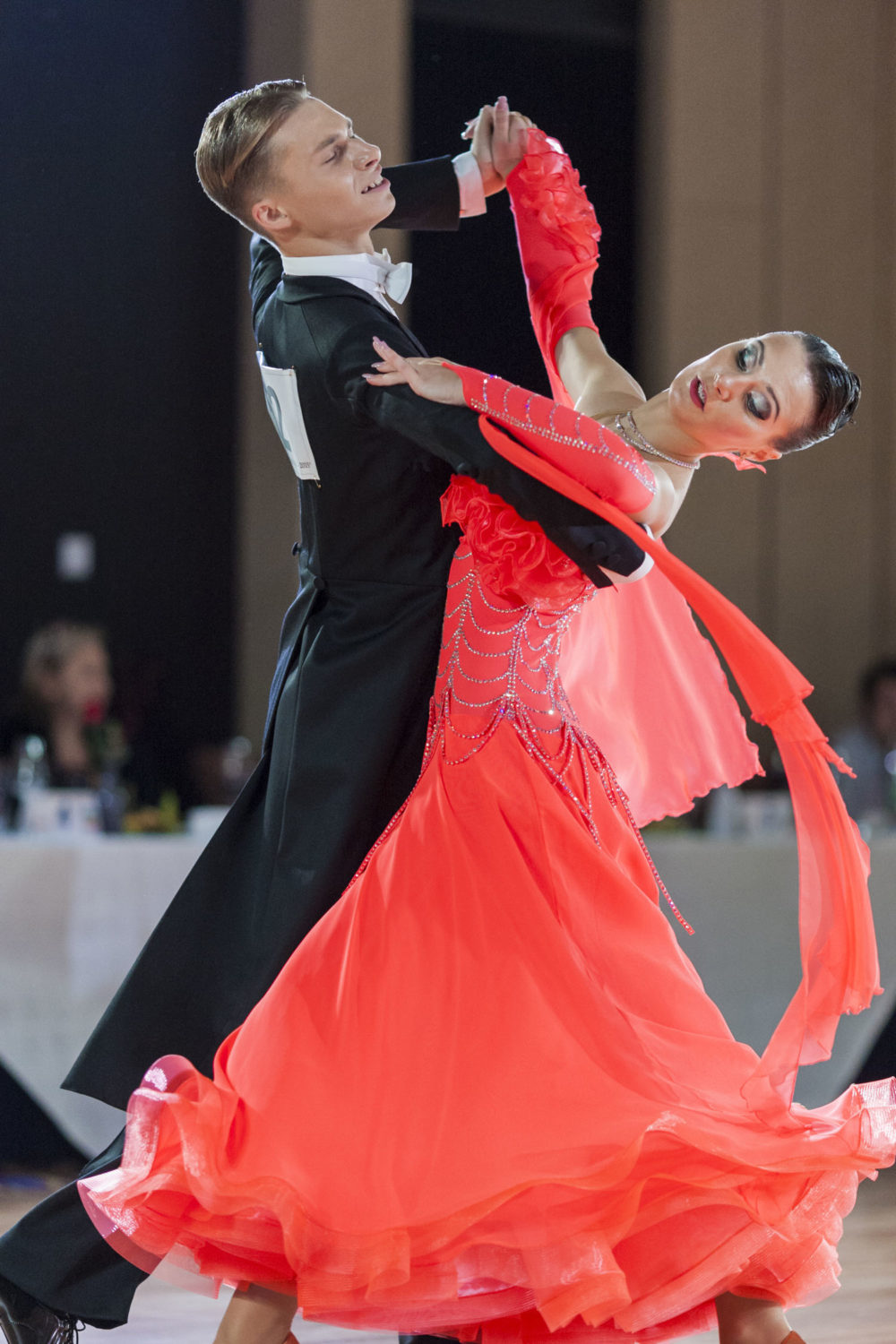
When dancing becomes a competition it becomes exclusively focused on structure, outward display and conformity. Dancers are judged on their conformity to defined standards and instructors focus on enforcing that conformity – they teach to the test. Any innovation or individual expression must stay within the bounds of what the judges, and the rules they enforce, will allow. This was exactly what those English dance teachers in the twenties and thirties were trying to do when they introduced ballroom dance competitions as a way of civilizing the raucous chaos of Jazz Age dancing.
Ballroom dancing in the “International”(formerly “British) and “American” styles have become something that, rather than form the core of universal and accessible social dance, now appeal to a very small, very exclusive, and often very passionate core group.
In parallel with this has been the Swing Revival that started in the Eighties and continues to this day. It has a large and enthusiastic following around the world, and while somewhat less structured than Ballroom Dancing (but far more structured than in its original inception), it too is challenging to learn and very performative. It’s very much about putting on a show.
The showmanship factor also applies to the current Latin dances and particularly to Tango, as it is widely practiced these days.
If I’m dancing, you bet I’m one of the REAL DANCERS. The rest of the world just needs to sit down and watch.
Which brings us to our present day.
Almost nobody dances anymore, and even in communities where dancing has been more common, more widespread than among suburban WASPs like me, it seems like it is in decline. Most of us are becoming passive consumers, spectators, and the idea that we would set aside our glowing screens, or get out of our chairs and actually participate doesn’t even seem like an option to most people.
Recently in New Orleans, I went to Tipitina’s, a famous Cajun dance club. People were out there dancing their two-steps and waltzes to some great music, but the dancers skewed pretty old (I fit right in). The only exception were a few young women who, as women so often do, wanted to dance, but they had to rely on the old guys to give them something boys their own age no longer can.
Even among the young folks who have carried on dancing since the Sixties: gyrating, Disco Dancing, Twerking, Crumping and whatever they’re doing today, to deafening, conversation killing music, the dance floor is not what it was.
The walls are closing in and all generations, especially the Young, are retreating into our own personal electronic Fortresses of Solitude.
Which brings me to my polemic. I very much want to revive the universal, non-performative social dance of the first half of the 20th Century. I want to normalize making social dancing a routine part of social occasions; and I want formal events, where for example, cocktails are served, to start routinely including a dance component.
I realize this is not an easy lift. We have gotten so far out of the habit that interjecting dance into a gathering that hasn’t been specifically defined as a dance event, can feel kind of awkward and weird.
Further, this style of easy-going, non-performative dancing is running up against some strong headwinds. People involved in the styles of dance that overlap it: Ballroom, Swing and Tango, are often quick to dismiss it as “less than” and unworthy of the name. It doesn’t really get any respect from people who are deeply invested in any of these styles, and they aren’t likely to offer support to its propagation or welcome it into spaces they considered their own.
On a practical matter, when the music of the twenties or thirties is playing at an event, the Swing Dancers tend to move in and claim the dance floor for themselves, which can make it difficult, and perhaps even hazardous for others to try to share the space with them – and unlike many dance venue managers back in the day, today’s event organizers with bills to pay aren’t likely to try to banish the jitterbugs and thereby put them in conflict with a large segment of their customers.
I suppose one could ask “Well, then why don’t we try to make Swing Dancing universal?” and the first thought to come to mind is that, while it is very popular, and appeals to a vastly broader demographic than it ever did when it was new, it’s been decades since the Swing Revival in the late 20th Century, and it hasn’t found its way to being anything like universal yet. At this point, it seems like it never will.
The reasons for this are pretty clear. It’s physically demanding, fairly complex to learn and by design, performative. This means that new dancers, especially men who are expected to lead, have to be prepared to put on a less-than-perfect show, and look clumsy and incapable in the process (alas, most men aren’t up for that); and all new dancers have to contend with the intimidation factor of watching the spectacular performances of the hot shot dancers, and feeling like those hot shots are the Real Dancers. A lot of dancers will see those performances and feel that it gives them something to aspire to; I fear too many will think that the dance floor is for those Real Dancers and not for them.
Further, it is really only suitable to music in a very specific style, despite the tendency of many to try to Lindy to most anything.
Ballroom dancing faces similar hurdles to reclaim its original place as the universal style. It has evolved into something quite a bit more daunting than it was back in the day. Being competition-driven, it is by nature performative and rigidly structured, with a strong streak of judgement. The awkward and unnatural looking postures demanded by competition tends to make it immediately unappealing to most outside observers, and the elaborate choreographed numbers staged on “Dancing With the Stars” may have attracted a few people to the “sport”, but probably convinced a far greater number that dances with names like Foxtrot and Waltz are for other people.
Other styles, such as Tango, in its several sometimes adversarial current forms, and various flavors of currently popular Latin (Salsa, Cumbia etc.) also share Swing’s connection to very specific music.
In these current performative styles, beginners are often subjected to fault-finding and nitpicking, often not so much by instructors but by other dancers who may think they are helping, or perhaps really want to keep their dance space exclusive, or compensate for their own insecurities by putting others down. The result is frustration and discouragement that frequently drives away the hesitant beginners before they can actually come to enjoy the dances.
To be clear, I do not in anyway disparage these dance forms. If there is a style of dance that a group of people love, then the world is a better place for having it, and having them, even if it is not to everyone’s taste. My only concern here is how applicable it might be to my desire to make social dancing an integral part of our social lives.
I am at a bit of a loss as to how to do that though, since it would require a fundamental change in some well entrenched attitudes toward dancing, and I have no illusions that we will ever come close to the levels of participation we saw in the world before the Second World War.
The first challenge of course is how to market it. How to we package this so that people want to participate. What do we call it?
Back in the day, they were called “Modern Dances”, but “modern” is a word with a limited shelf life. If something a century old can it be “modern”? Further, the term “Modern Dance” has been claimed by the successor to classical ballet, and is decidedly not, in the popular imagination, associated with social dancing.
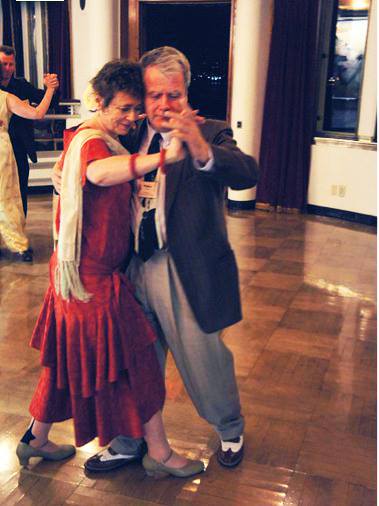
They were also called “Ballroom Dances”, but of course ballroom dancing has become associated with the structured, competition -focused successors to the dances of the early 20th Century.
I have hit upon the term “Cocktail Dancing”, since I think it captures the relaxed, social aspect of this style, and perhaps might enjoy some cross-promotion with the current fad for cocktails. Another possible name could be “Freeform Social Dance”, which can also free it from the limitations of being an historical artifact. I am also test marketing “Classic Social Dancing”.
What I would like to see is regular dance evenings, where people get dressed up, not necessarily “vintage” but in something that would make the moment seem a bit special, and make a real effort to look good, and then go to a place where they can sip on beverages, socialize with old and new friends, and have that socializing spiced up with relaxed, friendly, non-competitive social dancing.
This does actually happen from time to time in my home town of Los Angeles. A few times a year, the Art Deco Society puts on themed events that include dancing, one of which I founded and produce called the Avalon Ball in Catalina, that pulls in as many as 800 people, and there are other events in a nightclub downtown called the Cicada and on the Queen Mary ocean liner hotel in Long Beach.
Most of these events however recall the high end of what was done back in the day. A night at the Cicada today, like a night at the Stork Club in 1938, is very expensive. Further, sadly, depending on the band, the floor can be so overrun with Swing dancers, many of whom have no sense of floorcraft, that the tiny dancefloor is a bit more moshpit than dance space.
What I hope can be normalized is dance gatherings, either in the evening or afternoon at some hall, restaurant or watering hole, that don’t cost an arm and a leg, and that can be a routine occurrence. I would like the dancing to be in the simple, accessible without extensive lessons, non-judgmental and in the non-performative spirit of the Jazz Age -- where people can connect on and off the dance floor. The key thing is that people dance with consideration for their fellow dancers, and not create a hazard or nuisance with throw outs or other flashy moves when there is insufficient space to do it safely.
What I want to see more of is an opportunity for people to break out of their isolation and digital confinement and connect, in person, with real people. Unlike going to see a show (and I’m all for live theater and musical performance), this gathering would not be passive consuming of entertainment, but would be participatory. People could connect with one another, they could form friendships and friendly connections and perhaps, addressing one of the areas where modern life seems to be in crisis, if you’re looking for it you might find love.